
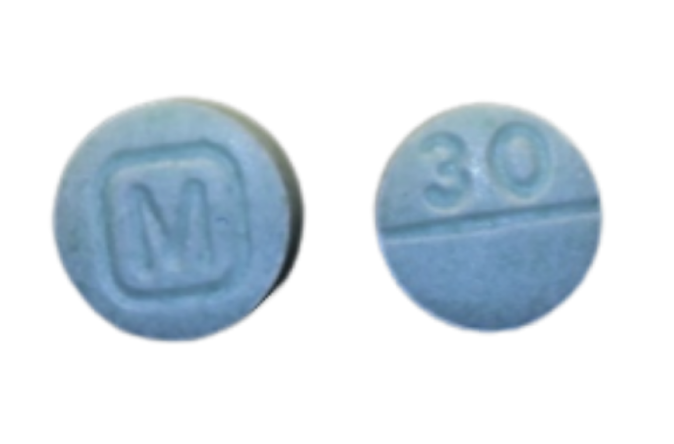
Most people who misuse opioids started with a prescription, often one from their own medicine cabinet. Understanding how opioids work is the first step to keeping yourself and the people you love safe.
Safe storage of over-the-counter (OTC) and prescription medication is one of the first steps in preventing stimulant addiction and misuse.
Prescription stimulants can include ADHD and depression medications.
The Center for Disease Control recommends storing medicines up, away, and out of sight.
It is important to safely and securely lock away medications. Watch the lock box demo from Lock and Talk.






This website is committed to ensuring digital accessibility for people with disabilities. To modify text sizing, color contrast, and more click on the accessibility menu icon to the right of the page.
We welcome feedback on the accessibility of this website. If you are unable to access content on this website, have questions about the accessibility of content or technology used and/or would like to report barriers to access please contact us.
Email: myvalleycsb@gmail.com
Phone: 540-887-3200

MyValleyCSB.com operates this URL . This page informs you of our policies regarding the collection, use, and disclosure of Personal Information we receive from users of the Site.
We use your Personal Information only for providing and improving the Site. By using the Site, you agree to the collection and use of information in accordance with this policy.
Information Collection And Use
While using our Site, we may ask you to provide us with certain personally identifiable information that can be used to contact or identify you. Personally, identifiable information may include but is not limited to your name ("Personal Information").
Log Data
Like many site operators, we collect information that your browser sends whenever you visit our Site ("Log Data").
This Log Data may include information such as your computer's Internet Protocol ("IP") address, browser type, browser version, the pages of our Site that you visit, the time and date of your visit, the time spent on those pages and other statistics.
In addition, we may use third party services such as Google Analytics that collect, monitor and analyze information.
Communications
We may use your Personal Information to contact you with newsletters, marketing or promotional materials and other information.
Cookies
Cookies are files with small amount of data, which may include an anonymous unique identifier. Cookies are sent to your browser from a website and stored on your computer's hard drive.
Like many sites, we use "cookies" to collect information. You can instruct your browser to refuse all cookies or to indicate when a cookie is being sent. However, if you do not accept cookies, you may not be able to use some portions of our Site.
Security
The security of your Personal Information is important to us, but remember that no method of transmission over the Internet, or method of electronic storage, is 100% secure. While we strive to use commercially acceptable means to protect your Personal Information, we cannot guarantee its absolute security.
Changes To This Privacy Policy
This Privacy Policy is effective as of 8/17/2021 and will remain in effect except with respect to any changes in its provisions in the future, which will be in effect immediately after being posted on this page.
We reserve the right to update or change our Privacy Policy at any time and you should check this Privacy Policy periodically. Your continued use of the Service after we post any modifications to the Privacy Policy on this page will constitute your acknowledgment of the modifications and your consent to abide and be bound by the modified Privacy Policy.
If we make any material changes to this Privacy Policy, we will notify you either through the email address you have provided us or by placing a prominent notice on our website.
Contact Us
If you have any questions about this Privacy Policy, please contact us at myvalleycsb@gmail.com
Please read these Terms and Conditions ("Terms", "Terms and Conditions") carefully before using the this website operated by Valley Community Service Board.
Your access to and use of the Service is conditioned on your acceptance of and compliance with these Terms. These Terms apply to all visitors, users and others who access or use the Service.
By accessing or using the Service you agree to be bound by these Terms. If you disagree with any part of the terms then you may not access the Service.
Content
Our Service allows you to post, link, store, share and otherwise make available certain information, text, graphics, videos, or other material ("Content").
Links To Other Websites
Our Service may contain links to third-party web sites or services that are not owned or controlled by Valley Community Service Board.
Valley Community Service Board has no control over and assumes no responsibility for, the content, privacy policies, or practices of any third party websites or services. You further acknowledge and agree that Valley Community Service Board shall not be responsible or liable, directly or indirectly, for any damage or loss caused or alleged to be caused by or in connection with the use of or reliance on any such content, goods or services available on or through any such websites or services.
Changes
We reserve the right, at our sole discretion, to modify or replace these Terms at any time. If a revision is a material we will try to provide at least 30 days' notice prior to any new terms taking effect. What constitutes a material change will be determined at our sole discretion.
Contact Us
If you have any questions about these Terms, please contact us.